

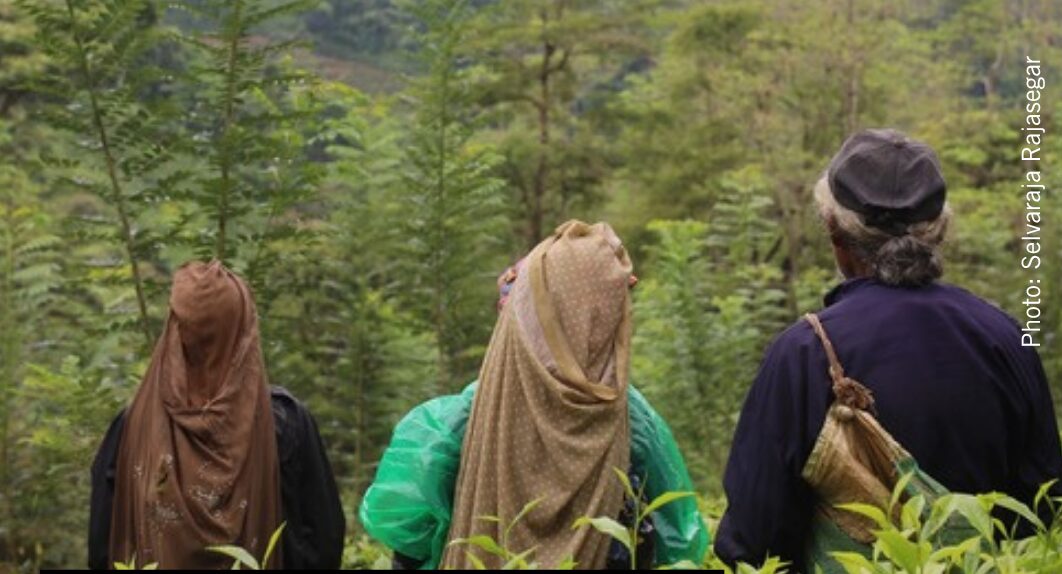
Malaiyaha Tamils working on private tea estates and smallholdings in Sri Lanka are being subjected to abuses that meet many of the International Labour Organization’s (ILO) indicators of forced labour, while being denied access to the country’s strict labour protections, Amnesty International said in a new report.
The research, which documents the plight of workers in Sri Lanka’s Southern Province. found that members of the marginialized Malaiyaha Tamil community suffered multiple and widespread forms of abuse including intimidation and threats, physical violence and harassment, debt bondagr, restrictions on movement, and poor working and living conditions.
The report found that, in addition to its failure to address these labour abuses, the state is failing in its duty to ensure workers’ rights to social security, unionization, and access to justice. As an ILO member and party to 44 of its conventions, as well as UN human rights treaties such as the International Covenant on Economic, Social and Cultural Rights, Sri Lanka is obliged to ensure that workers are protected from discrimination and labour and human rights abuses.
“Private tea estates in Sri Lanka are systematically violating labour laws in their treatment of Malaiyaha Tamil workers with no accountability. Across the sites we visited, workers reported a consistent pattern of discrimination and abuse, including violence, debt bondage, withheld wages, and poor living and working conditions, raising serious concerns about forced labour. The persistence of these abuses despite existing legal safeguards reflects a serious failure of the state to enforce labour protections and safeguard workers’ rights,” said Smriti Singh, Amnesty International’s Regional Director for South Asia.
“Sri Lanka’s obligation to eradicate the use of forced labour is clear – both under domestic and international law including as a member of the ILO. The authorities must urgently prioritize inspecting these estates to determine the extent of labour rights abuses. This should be followed thorough investigations, prosecutions of those responsible and meaningful remedies for workers.”
The report is based on research conducted by Amnesty International between January 2024 and January 2026. Amnesty International visited 45 estates in Galle and Matara districts in the Southern parts of Sri Lanka and conducted 159 interviews with workers along with interviews of two estate manages and three supervisors. Fifteen focus group discussions were also held with 65 workers.
Longstanding concerns of forced labour and other abuses continue
Malaiyaha Tamils – descendants from workers brought to Sri Lanka from the southern part of India by British colonizers in the early 19th century to work on tea plantations – have long experienced systemic and structural racial discrimination and exclusion, which have made them vulnerable to forced labour.
To date, they are heavily dependent on their employers for their livelihoods, accommodation and welfare, which leaves them unable to challenge poor living and working conditions and labour law abuses. On all 45 estates visited, workers said that they relied on their employer for housing and lived in fear of forced eviction.
Workers on 15 estates told Amnesty International that they had been subjected to or had witnessed verbal and/or physical abuse by estate managers for being late for work, enquiring about unpaid salary and other issues. One worker said: “If you don’t work [and meet the targets], they tend to beat you… They’ll hit you with their hands and legs, and with sticks. They’ve hit some people so badly you can’t bear to look. It’s still happening.”
The research found that estate managers often cited spurious reasons for withholding pay based often on unrealistic targets, forcing workers to rely on wage advances and loans to meet basic needs, putting them in even more debt. Out of the 45 estates visited, 27 reportedly demanded that workers pick over 25kg of tea per day. Failure to meet these unrealistic targets would result in wages of as little as LKR 1,000 (US$3.10) per day, being docked or delayed.
One worker, Subramaniam, said: “If we do not finish the assigned work, they count three days of work as one day’s work. If we finish the work, they pay LKR 1,000 (US$3.10).”
Such tactics result in a cycle of increasing debt to estate owners that may amount to debt bondage – a form of forced labour thst can result to the workers being tied to employers acress generations.
Workers on at least 22 estates described restrictions on their freedom of movement, including curfews and requiring approval to travel. Their living conditions also failed to meet key elements constituting the right to adequate housing, including lack of security of tenure, sufficient space and adequate sanitation.
Labour protections denied
These abuses are compounded by the fact that that the labour protections enshrined in domestic laws are not being enforced by the state and cannot be accessed by Malaiyaha Tamil tea estate workers.
Employers on private estates and smallholdings exploitatively misclassify Malaiyaha Tamil workers as “casual workers”, denying them all labour-related legal entitlements and basic statutory benefits. Few receive maternity benefits, pension and sickness leave.
Malaiyaha Tamil workers face challenges to accessing justice, particularly remedies for abuses and poor working conditions. These include a language gap as state authorities that could offer protection do not typically speak Malaiyaha Tamil, discriminatory treatment by state officials, and lack access to employment documentaion. Trade union representaiton is often entirely absent or prohibited by their employers- the estates visited during the research did not have unions operating.
The research also found significant failings in labour inspections and enforcement of employment standards at tea estates in the Matara and Galle districts.
“The exploitation of Malaiyaha Tamil workers is being enabled by entrenched discrimination, extreme marginalization, and systematic mischaracterization of their status that deprives them of the protection og the law,” said Smriti Singh. “We urge the authorities to fully enforce the law, dismantle the barriers preventing the Malaiyaha Tamil community from accessing their rights, and stregnthen labour protections and accountability across private tea estates.”