From 9 to 20 November, governments, scientists, activists, corporate lobbyists, diplomats, Indigenous Peoples and communities affected by climate change will gather in Antalya, Türkiye, for COP31, the annual UN climate conference.
COP31 comes after a year in which the climate crisis has become even harder to ignore. In September 2026, the United Nations acknowledged for the first time that the world is set to overshoot its target of limiting global warming to 1.5°C above pre-industrial levels within the next few years. The warning came as global temperatures continued to soar with the last two months setting global heat records.
The science is undeniable; the legal obligations irrefutable; and the human rights stakes unfathomable. Human activities, particularly the extraction and burning of coal, oil and gas, are heating the planet and intensifying threats to human rights. Governments cannot portray climate inaction as a neutral position. Climate inaction, and worse, governmental provision of tax, political, and regulatory support to the fossil fuel industry, are deliberate choices made in the face of overwhelming evidence, with devastating consequences for people and their rights. By acting together and placing justice at the centre of climate action, governments can still limit further harm and build a fairer future.
What is a COP meeting?
COP stands for Conference of the Parties. It is the main decision-making forum of the UN Framework Convention on Climate Change, or UNFCCC, the international treaty agreed in 1992 and the parent treaty of the 2015 Paris Agreement.
COP meetings bring almost every country together to negotiate collective action, based on historical responsibility and capacity, on reducing greenhouse gas emissions, adapting to climate change and supporting countries and communities experiencing loss and damage.
This year’s unusual leadership arrangement gives both Türkiye and Australia significant responsibility as co-hosts. Türkiye will host COP31 and Australia will lead the official negotiations. Both countries must demonstrate credible climate leadership and not hide behind each other to deflect attention from their lack of action. Türkiye’s continuing reliance on coal and pursuit of fossil gas risk locking it into a high-emissions pathway. Australia must confront the contradiction between leading global climate negotiations and continuing to support fossil fuel extraction and use.
Pre-COP31 spotlight on the Pacific
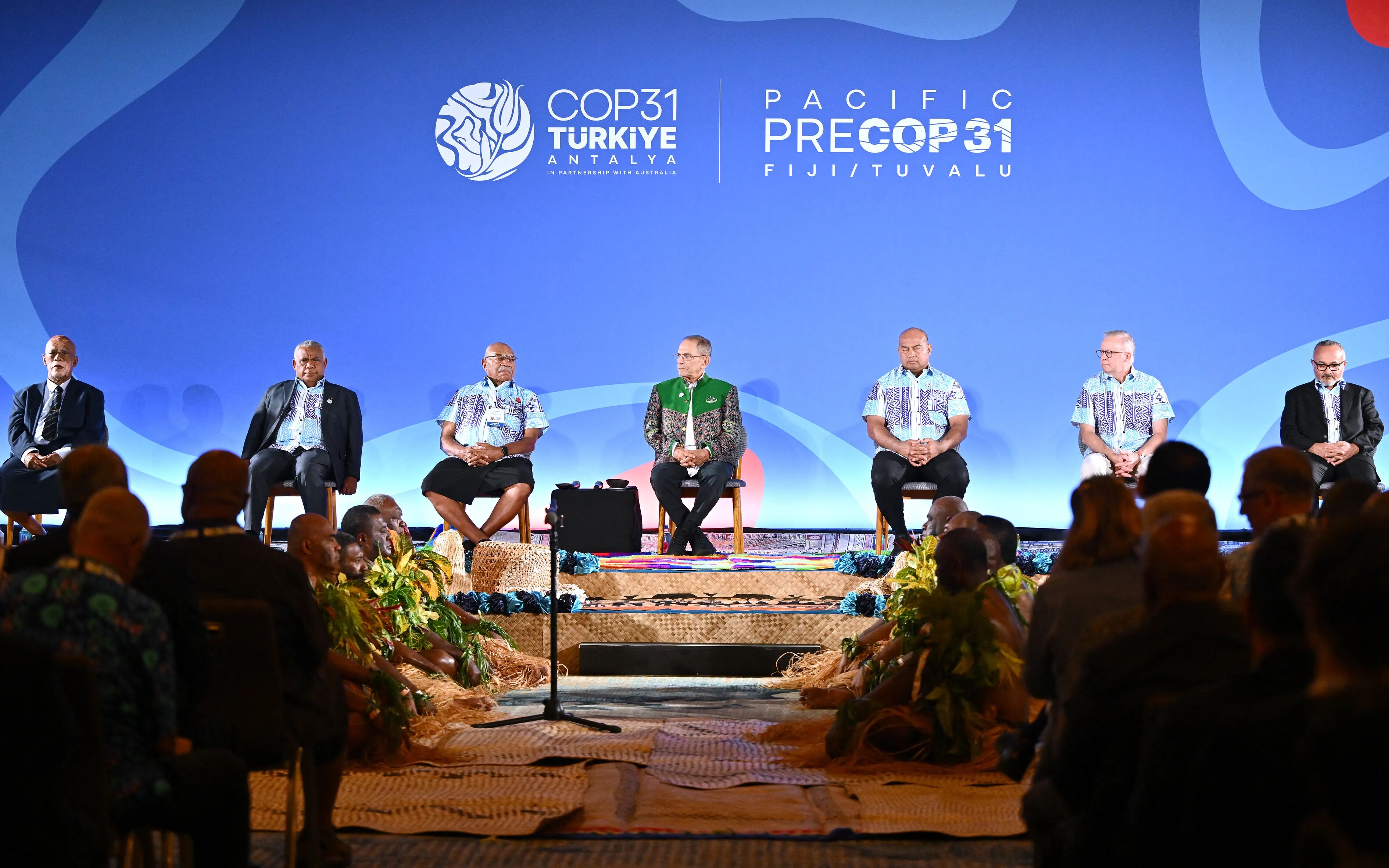
Official pre-COP meetings and leaders’ events already took place in Fiji and Tuvalu from 5 to 8 October, bringing Pacific leadership and priorities into the run up to the main summit. Amnesty International has documented how climate change is already harming human rights in Tuvalu, Kiribati and other Pacific Island countries. In Tuvalu, Kiribati and across the region, rising seas, extreme heat, drought and saltwater intrusion threaten people’s rights to water, food, health, housing, culture and a safe future.
Students from the Pacific took the fight against climate change to the world’s top court, leading the International Court of Justice to issue a landmark Advisory Opinion in July 2025, which made it clear that governments have a legal obligation to protect human rights from climate change impacts.
After more than 30 years of climate negotiations, governments can no longer hide behind promises of future action. The science is settled, the solutions are available and the resources exist. Continued delay is a political choice, one that protects fossil fuel interests while Pacific communities lose land, livelihoods, rights and cultural heritage.
As President of Negotiations, Australia must ensure that Pacific demands become concrete COP31 outcomes. It cannot credibly claim climate leadership abroad while expanding fossil fuel projects at home that deepen the harms to Indigenous People, Pacific neighbours and other frontline communities. Australia must end this contradiction by ending fossil fuel expansion, accelerating a just transition and securing far greater support for communities facing irreversible loss and damage.
Why is COP31 so important?
Every COP matters, but the window for preventing escalating and irreversible harm is closing rapidly. In October 2026, the UN Environment Programme warned that the world needs to cut carbon emissions by nearly a fifth in the next four years, and by close to half within a decade, to avoid overshooting climate targets by a disastrous margin. The higher and longer the overshoot, the greater the danger to people, ecosystems and economies. The harm caused cannot be undone.
Overshooting 1.5°C cannot become an excuse for resignation. Every fraction of a degree matters to human and planetary life. Governments must cut emissions urgently through a just and equitable phase out of fossil fuels, protect affected communities and prevent warming from reaching even more dangerous levels.
Yet many major economies continue to approve new fossil fuel production and prolong dependence on coal, oil and gas, including through subsidies, tax breaks, and other support. In many contexts, the fossil fuel industry is a powerful actor, shaping politics and legislation domestically and overseas. Meanwhile, climate science is being undermined and the social solidarity needed to drive action is being deliberately fractured by authoritarian state and corporate forces. The result is a vicious cycle of disinformation, regulatory sabotage, coercive diplomacy and fossil fuel lock-in. It lays bare a widening gap between what science tells us is necessary and what human rights law obligates governments to do one hand, and what governments are willing to do on the other hand.
How is climate change affecting human rights?
Everyone has the right to live in a clean, healthy and sustainable environment. Climate change also threatens the rights to life, food, water, health, housing, culture and an adequate standard of living.
In 2026, unprecedented climate-related disasters worldwide and its human consequences were visible across the world:
A catastrophic glacier collapse in the Himalayas unleashed flooding across Nepal and Tibet with more than 1400 people killed.
Severe flooding affected Mozambique, Eswatini, South Africa and Zimbabwe early in the year, killing more than 200 people, destroying homes, damaging health facilities and schools, and devastating farmland and livelihoods.
Record-breaking heatwaves and drought killed tens of thousands and fuelled severe wildfires across the world, including in Türkiye, Indonesia, Europe, North Africa and Canada. These led to significant damage and evacuations.
The human cost of climate breakdown is impossible to ignore any longer.
Why must fossil fuels be phased out?
We know that humans’ burning of fossil fuels is the main source of greenhouse gases that become concentrated in our atmosphere. These gases trap the sun’s heat, leading to a long-term rise in the planet’s average temperature and causing shifts in weather patterns as well as rising sea levels that will wipe out small island states and much low-lying coastal land.
Therefore, to protect human rights now and in the future, and prevent even greater harm, governments must deliver a full, fast, fair and funded phase-out of fossil fuels.
There are many alternatives to fossil fuels, like wind and solar power, that will enable us to reduce our dependency on fossil fuels. The global push towards electrification using renewable energy is essential, but the transition must respect human rights and not reproduce the abuses and inequalities of the fossil fuel economy.
What must governments agree at COP31?
Amnesty International is calling on governments to advance three priorities:
1. Stop the climate crisis at its source: End fossil fuel expansion and accelerate a full, fast, fair, funded and human rights-compliant transition away from coal, oil and gas, with the states the most responsible for historical emissions moving furthest and fastest. Renewable energy is cheaper than fossil fuels; governments must stop supporting their allies in the fossil fuel industry with taxpayer funded subsidies.
2. Support communities through the transition: Make the Just Transition Mechanism. a body established at COP30 that aims to coordinate international cooperation for just transition initiatives, operational, properly funded and accountable, with Indigenous Peoples, workers and affected communities directly involved in decisions.
3. Scale up climate finance: High-income, high-emitting countries must tax major polluters and substantially increase grants-based climate finance to support a just fossil fuel phase-out, adaptation, loss and damage, and the protection of forests and other critical carbon-storing ecosystems. This support must uphold human rights and avoid pushing lower-income countries deeper into debt.
Justice demands that those most responsible for heating the planet, and those with the greatest capacity to act, do and pay their fair share.
Spotlight on Türkiye
In September, the Turkish authorities launched a nationwide operation targeting LGBTI+ organizations, activists and human rights defenders. Homes, venues and offices were raided, more than 100 people were detained, dozens of whom were subsequently remanded in pretrial detention and over 1000 social media accounts belonging to activists, journalists and human rights organisations were blocked or restricted, including that of Amnesty International Türkiye. In October, in another serious escalation, authorities raided and seized control of a major opposition television channel in a significant blow to press freedom.
This is not an isolated attack or one confined to a single community. It is part of a sustained crackdown with arbitrary restrictions on peaceful assembly, association and expression over the last decade. Environmental defenders, journalists, women’s rights activists, political opponents and LGBTI+ communities may be targeted in different ways, but the effect is the same: dissent is silenced, divisions are stoked, and fear spreads – making it harder for people to hold their government accountable for climate action or any other human rights issue.
For the vital negotiations about protecting our shared future to be effective and equitable at COP31, Türkiye must end its crackdown on human rights and those who defend them.
Why is protecting civic space important for a UN summit like COP?
UN climate conferences remain among the few global spaces where almost all states come together alongside Indigenous Peoples, civil society representatives in all their diversity and communities campaigning for climate justice. Fossil fuel lobbyists will be there too – as they are in almost all forums where climate change is discussed. Protecting civic space at COP is essential to overcoming fossil fuel obstruction and securing effective climate action. As it is, the scales are tipped in favour of industry. Any erosion in protections for civil society at COP will tip the scales further.
Around the world, governments and corporations have criminalised protest and subjected environmental human rights defenders to intimidation, surveillance, detention and violence. Authoritarian attacks on environmental human rights defenders, women, LGBTI+ people and other marginalised communities are not separate political projects. They divide societies, weaken collective action and protect entrenched power while fossil fuel production continues.
Yet people continue to resist as documented by Amnesty International in its new briefing, ‘Protecting our Future: Environmental Human Rights Defenders Powering Just Transitions’.
There can be no climate justice without the freedom to demand it.