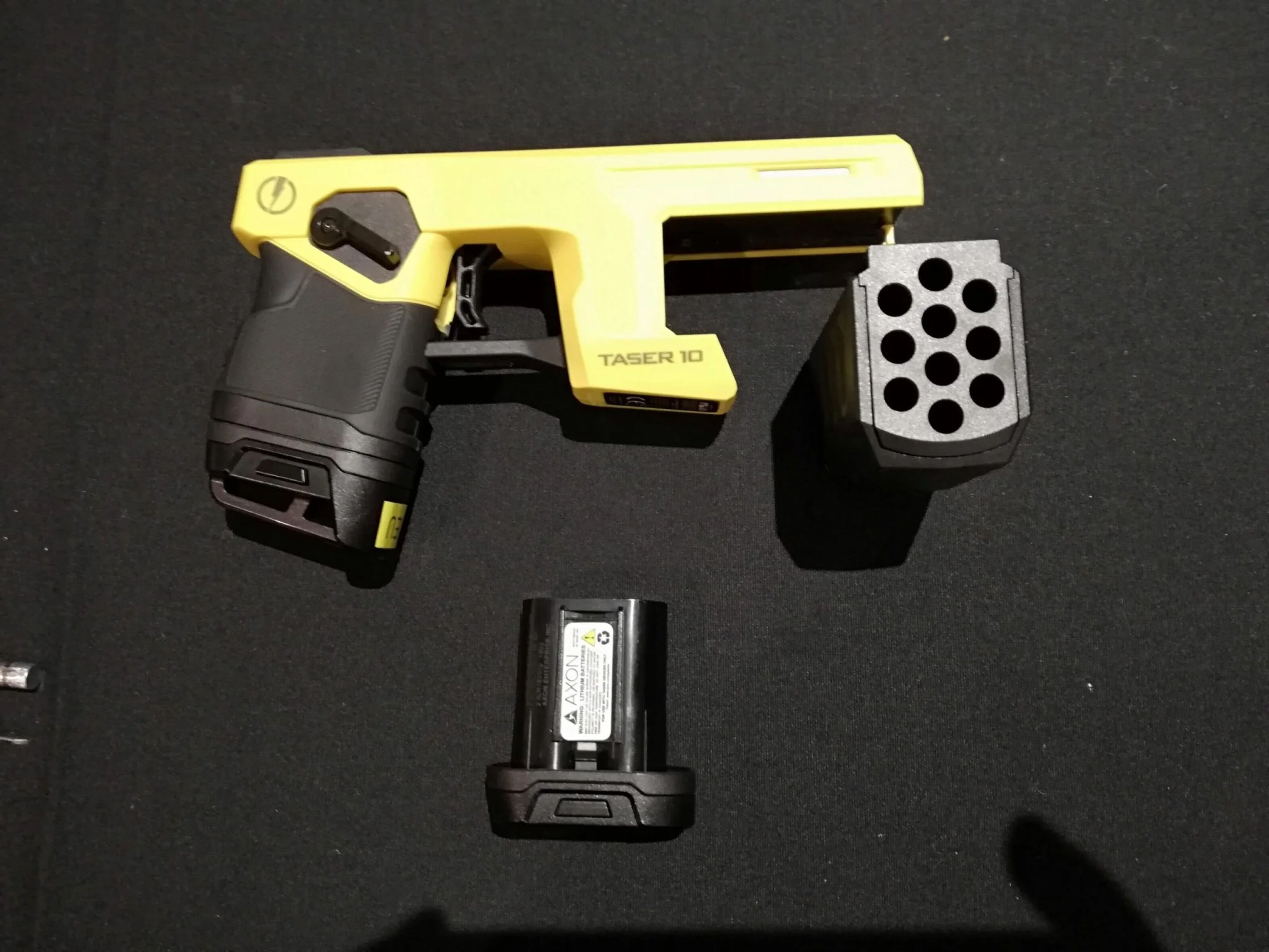
On Sunday 14 June, An Garda Síochána announced a six-month extension of the taser pilot and an expansion of the pilot to the Limerick division in the coming months. The Irish Council for Civil Liberties (ICCL), Amnesty International, Omega Research Foundation, Mental Health Reform, Prof. Abi Dymond, Dr Lucy Michael, Dr Illan rua Wall, and Dr Cian Ó Concubhair remain seriously concerned about the introduction of tasers into front-line Irish policing.
Gardaí have a legal obligation to discharge their duties in accordance with human rights. Accordingly, any expansion of Garda powers must be analysed according to the human rights principles of proportionality and necessity. The limited information available on the use of tasers during the pilot raises serious questions about whether tasers meet this threshold and are needed in Irish policing.
According to An Garda Síochána, tasers have been used 15 times and discharged three times in the pilot. Three of the 15 uses (20%) occurred in situations of mental health crisis. In only six of the 15 uses did the person produce a weapon. While the limited use of tasers is obviously welcome, it also raises serious questions about whether their use in Irish policing is warranted.
The model of taser that is being used in the pilot, the taser X26P, is included on the UN Special Rapporteur on torture’s list of weapons that can be misused to inflict torture or ill-treatment. This classification highlights the devasting impacts of potential taser misuse and reiterates how tasers should only be used when strictly necessary (i.e., when there is an immediate threat to life or risk of serious injury). Based on answers to parliamentary questions regarding the threshold for taser use, we are concerned that this threshold is not met in the parameters for the pilot. Furthermore, we reiterate our previous concerns regarding the lack of transparency and public information about the pilot. The parameters for the pilot have not been published and An Garda Síochána’s Use of Force Policy and Use of Taser Policy are not publicly available. In practice, this means that the Irish public does not know the exact circumstances under which tasers will be used.
The Minister for Justice said in the Dáil in March that the Use of Force Policy “is being developed currently and is at an advanced stage” and that it would be subsequently published on the Garda website. However, as of 30 June, it has yet to be published. Attempts to seek further detailed information about the pilot and its parameters via Freedom of Information requests have been largely unsuccessful, with any substantive information denied under provisions of the Freedom of Information Act 2014.
We reiterate our earlier concerns that the use of tasers against particularly vulnerable communities has not been adequately considered by An Garda Síochána. The parameters for the pilot and the Use of Taser Policy should both clearly state that there should be a presumption against taser use against children and other vulnerable people, like the elderly, pregnant persons, children, people experiencing mental health crisis, persons with an intellectual disability, persons with pre-existing heart conditions and those who are under the influence of drugs or alcohol. This would align with guidance from the UN Committee on the Rights of the Child and the European Committee for the Prevention of Torture.
Lastly, we are deeply concerned that this pilot will continue without the publication of the independent assessment of the pilot. Such scrutiny is required to ensure that the pilot is meeting its purported goals, including de-escalation and protection of gardaí. An Garda Síochána recently announced the national roll-out of body-worn cameras following a pilot, without publishing the pilot findings. New tools of force and surveillance should not be introduced without sufficient justification, transparency and scrutiny.