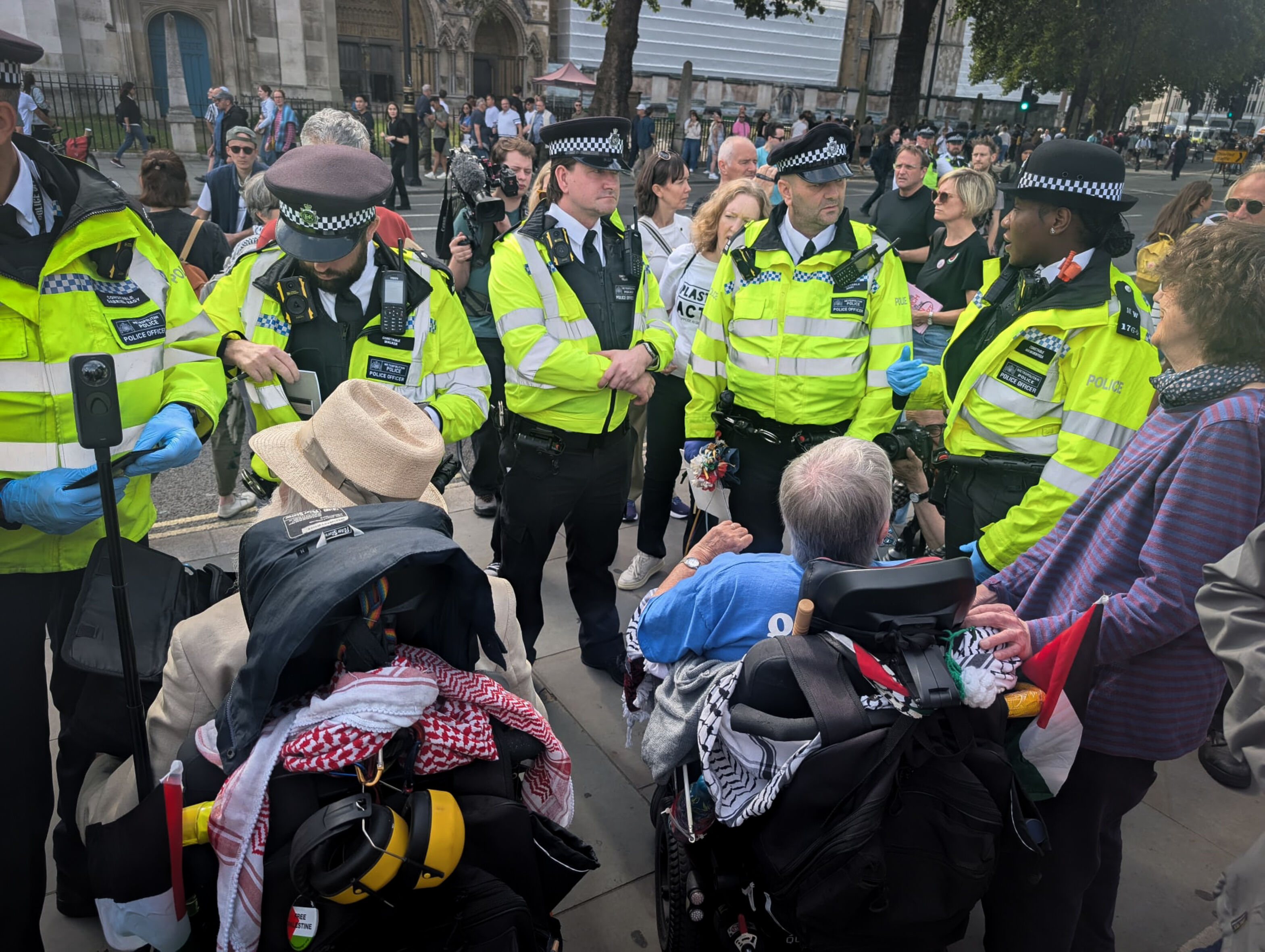
Amnesty International UK has welcomed today’s High Court judgment declaring the Government’s proscription of Palestine Action under terrorism legislation unlawful – a vital affirmation of the right to protest at a time when it has been under sustained and deliberate attack.
The Court was clear: the Home Secretary can’t reach for the nuclear option simply because it makes policing easier. Using proscription to criminalise people’s expressions of support or to hand police sweeping disruption powers was never what the policy allowed. The Court also found that the proscription resulted in a very significant and unjustified interference with freedom of expression and freedom of peaceful assembly (Articles 10 and 11 ECHR).
Kerry Moscogiuri, Amnesty International UK’s Chief Executive, said:
“Today’s ruling is a crucial defence of the right to protest at a time when it has been under sustained and deliberate attack.
“The High Court decision sends a clear message: the Government cannot simply reach for sweeping counterterrorism powers for its convenience, to suppress dissent and hand police more powers. Leaving such powers unchecked would keep the door wide open for future governments to wield this excessively sweeping legal framework in ever more draconian ways.
“We welcome this judgment as an essential check on overreach and a powerful reminder that fundamental rights still carry real weight in UK law.”
Human rights: interference, chilling effect, and proportionality
The Court held that while violent or nonpeaceful conduct falls outside the scope of protected protest, proscription went far beyond that. It criminalised peaceful protest and advocacy carried out under the “Palestine Action” banner, producing a severe chilling effect on lawful speech and assembly.
The judges concluded that ordinary criminal law was more than adequate to deal with unlawful acts, and that the breadth of proscription was disproportionate given the nature and scale of conduct said to meet the statutory definition of terrorism.
Amnesty International noted the Court’s emphasis that proscription is among the state’s most draconian measures and cannot be used as a shortcut to suppress political activism or association. The ruling underscores that Articles 10 and 11 ECHR require compelling justification, which was lacking here.
“We are relieved — and encouraged — that the Court has recognised the dangers of treating direct action as terrorism. This decision halts a pattern of escalating restrictions, aggressive policing tactics, and an ever-expanding definition of what constitutes ‘terrorism’. It draws a clear boundary against attempts to narrow the democratic space and undermine public confidence in the right to speak out,” Moscogiuri added.
Implications for democratic space
The ruling carries profound implications for the UK’s wider approach to protest and counterterrorism. The Court confirmed that sweeping terrorism powers must not be deployed to police protest movements and recognised the very real chilling effect created when people fear that lawful speech or assembly could be criminalised. It highlighted the particular risks faced by journalists, academics and civil liberties organisations — including Amnesty International — noting that section 12 offences have inhibited legitimate scrutiny, teaching and campaigning.
Together, these findings underline just how far-reaching and damaging the proscription’s impact has been, and why strict human rights safeguards are essential to prevent such overreach.
“A healthy democracy depends on people being able to organise, protest, and hold power to account without fear of being branded a threat. Today’s outcome reinforces that principle and shows why safeguarding our rights against disproportionate, politically motivated interference is essential,” says Moscogiuri.
Amnesty: We will keep defending the right to protest
Following today’s ruling, the Home Secretary has indicated that the government plans to appeal. Amnesty International urges the government to reconsider. The government must recognise the huge damage the proscription has caused to protest rights in the UK, respect today’s decision, and accept the proscription was wrong.
Amnesty International UK will continue to expose efforts to erode protest rights and to support those targeted for peaceful activism.