
Despite the stark challenges currently facing humanity, Amnesty International continues to witness how people from all over the world are demonstrating the importance of activism and the life-changing power of solidarity. From holding governments to account and pursuing justice for survivors of gender-based violence, to freeing human rights defenders, here are some inspiring stories of hope and humanity from the past six months to take you into the new year.
July
Global: Two landmark Advisory Opinions this year significantly contributed to clarifying the states’ human rights obligations in the face of the climate emergency, bolstering the fight for climate justice and accountability. In July, the International Court of Justice’s (ICJ) made clear that the full enjoyment of human rights cannot be ensured without protection of the climate system and other parts of the environment. The world’s highest court stressed that states have a duty to act now, including to regulate the activities of private actors, and cooperate to protect current and future generations and ecosystems from the worsening impacts of human induced climate change. Earlier in the month, the Inter-American Court of Human Rights issued its Advisory Opinion setting transnational standards that could also shape legal jurisprudence in courts across the world.
Togo: Following calls from Amnesty International and other civil society organizations, an investigation was launched on 6 July into the deaths of five protesters recovered from rivers in the capital, Lomé. Authorities had initially refused to provide information about the deaths of the five individuals who had participated in protests that were violently repressed by security forces in the days prior, claiming that they had drowned.
Argentina: The perpetrator of a targeted arson attack that killed three lesbian women in 2024 was finally charged with aggravated homicide, motivated by homophobia. Amnesty International is supporting Sofia, the only survivor of the attack, in her pursuit of justice.

On May 6, 2024, in Barracas, Buenos Aires, a man threw a firebomb into the room of two lesbian couples. Andrea, Pamela, and Roxana were killed in the attack, while Sofía survived. © Tomás Ramírez Labrousse | Amnesty International
Senegal: Following calls from Amnesty International, the Minister of Justice requested the General Prosecutor open an investigation into “political violence” that had taken place in Senegal from 2021 to 2024. Over that period, Amnesty International conducted research and denounced the killings of at least 65 people during demonstrations and the arbitrary detention of hundreds of people ahead of the 2024 presidential elections.
Slovenia: On 31 July, Slovenia banned all arms trade with Israel, including imports, exports, and transit, becoming the first EU member state to do so. A week later, on 6 August, the Slovenian government also banned the import of goods from Israel that originate from illegal Israeli settlements in the OPT. Amnesty International Slovenia, together with other non-governmental organizations and support from civil society, had long urged the government to adopt these measures.
August
IOPT: On 24 July, an Israeli court lifted the travel ban on Ahmad Khalefa, a Palestinian citizen of Israel, allowing him to accept an invitation from Amnesty International to travel to Italy with his family. Amnesty International organized the trip for Ahmad, securing an invitation letter from its Italian office which was used in court by his lawyers at the Adalah Center to challenge the travel ban, which significantly strengthened his case. The ban was imposed on Ahmad, as part of the conditions of his release in February 2024, after he was detained for almost four months for chanting slogans during a protest against the Israeli war on the Gaza Strip. After returning from Italy, Ahmad thanked Amnesty International: “This trip meant the world to me and my family – we truly appreciate it. It was incredibly meaningful to feel the care and effort that went into organizing this trip and it gave us the opportunity to breathe and enjoy quality time together.”
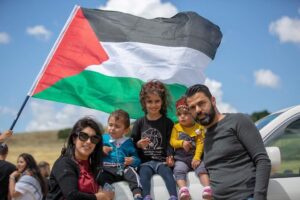
Ahmad Khalefa, a Palestinian citizen of Israel, is a lawyer, human rights defender, community organiser and newly-elected city council member. He is pictured here with his family. © Private
Syria: In 2023, Syrian asylum seeker Ahmad Aabo had his temporary protection revoked while he was living in Türkiye, due to an HIV diagnosis. On 26 August 2025, he had his status restored following calls from Amnesty International. His social security was reactivated, restoring his access to free healthcare. “The urgent action appeal helped me breathe again. I want to send my sincere gratitude to everyone. Simply because of my HIV+ status, I endured persecution, I was detained. I feared being detained every time I saw a police officer,” said Ahmad Aabo. “Now I have my ID card again, I have regained my rights. This is the impact of the urgent action. Thanking you is not enough. I wish that no one goes through what I have been through. People living with HIV should be supported. They should not endure torture. I thank all those who signed appeals for me, all those who stood by me from the bottom of my heart.”
Türkiye: Amnesty International launched an urgent action that helped secure the release of three activists – Hivda Selen, Sinem Çelebi, and Doğan Nur – who were arbitrarily detained on 29 June, the day of the Istanbul LGBTI+ Pride march, and remanded in pre-trial detention on baseless charges. Doğan Nur was released on 30 July after his lawyer’s appeal. On 8 August, Sinem Çelebi and Hivda Selen were released at their first hearing in a trial involving 53 people. “The ever-expanding patterns of repression and intimidation, coupled with detentions, have become a form of punishment in Türkiye. In such a climate, it is more vital than ever that we build social solidarity and speak out against the increasing unlawfulness,” said Doğan Nur. “With the urgent action that Amnesty International launched on our behalf, many people have heard about it and joined the quest for justice to ensure this unlawful detention ends. I would like to thank Amnesty International and its supporters for their contribution to this process. Solidarity keeps us going!’’
September
Egypt: Alaa Abdel Fattah is an Egyptian-British activist, writer, and software developer. He rose to prominence during the 2011 Egyptian revolution and has been repeatedly targeted by Egyptian authorities for his peaceful activism and criticism of the government. His most recent arrest was on 29 September 2019, amidst a widespread crackdown on protests. In December 2021, he was sentenced to five years in prison by an Emergency State Security Court on spurious charges of “spreading false news,” related to a social media post. He was due to be released in 2027, as the Egyptian authorities decided not to deduct his pretrial detention period from the prison sentence. Amnesty International and Amnesty UK have extensively campaigned for his release for years. He was finally granted presidential pardon and released in September 2025. His release would have never happened without the tireless campaigning and pressure by his mother Laila Souif and his sisters Mona and Sanaa Saif.
Türkiye: Tens of thousands of appeals sent by Amnesty activists helped secure the release from pre-trial detention of human rights defender and LGBTI+ activist Enes Hocaoğulları, who was imprisoned after he criticized the crackdown on mass protests following the detention and imprisonment of Istanbul Mayor Ekrem İmamoğlu during a speech at the Council of Europe in March 2025. When he returned to Türkiye on 5 August, he was taken into police custody and remanded to pre-trial detention the same day. On 8 September, he was released at the first hearing, after Amnesty International issued an urgent action on his behalf. His next hearing is scheduled for 23 February 2026. Following his release, Enes Hocaoğulları said: “Thanks to a successful campaign, I was released from pre-trial detention at my initial hearing. However, the fight is not over for my case, nor for freedom of expression more broadly. But it goes without saying that I’d be in a much different place without to the success of these campaigns – especially the one co-ordinated and operated by Amnesty International. “I’m one of the lucky human rights defenders. There are so many that have been facing and will continue to face reprisals for their activism – that receive little to no support. To remind you of the importance of the protection of human rights defenders and the effectiveness of such campaigns, I leave you these words from a Roman poet: ‘Who guards the guards?’ I ask you: ‘Who defends the rights of the human rights defenders?’”
Burkina Faso: Burkina Faso ’s Transitional Legislative Assembly passed a law on 1 September setting 18 as the minimum age for marriage for boys and girls, establishing consent as the basis of marriage. Amnesty International has long called for an end to gender-based violence, including forced marriage, through its human rights education programme. As a leading member of the National Coalition Against Child Marriage, Amnesty International also proposed amendments to the draft bill to increase the legal age of marriage to 18 years for both boys and girls and lobbied for the draft bill to be passed into law.
October
Afghanistan: Following months of advocacy by the Sports & Rights Alliance and Amnesty International, FIFA finally announced that it would establish and fund an Afghan women’s refugee team. The Afghanistan women’s football team, which was first formed in 2007, had disbanded after the Taliban took over in 2021, with players forced to evacuate the country for fear of reprisals. Since leaving Afghanistan, the team had continued to campaign for their right to play and to represent their country. In October, FIFA organized a tournament in Morocco so the team could play its first international matches against Chad, Tunisia and Libya. The team were renamed Afghan Women United. According to Khalida Popal, founder and former captain of the team, “We have been fighting for so long, it’s kind of tiring, it’s too much. But at the end of the day, when you see the players returning back on the pitch, you get this feeling that it’s all worth it. It was all worth it to see this young generation of women representing our country. It was quite emotional for me.”

Players of Afghanistan national women football team attend to a training session at Odivelas, outskirts of Lisbon. © Patricia de Melo Moreira /AFP via Getty Images
November
Greece: Following an Amnesty International campaign, the head of the Greek coastguard, along with three executives, were charged for their role in the Pylos shipwreck, in which over 600 people died. This followed the charges brought against 17 officers in May.
Argentina: Progress was made in the fight for justice for Sofía Fernández, a 39-year-old trans woman who died in police custody in April 2023, in Pilar, Buenos Aires province, two days after being arrested by local police. In July, nine of the ten officers charged in the case were initially dismissed; however, in November, the Court of Appeals ordered all ten officers to stand trial. Three of them will face charges of aggravated homicide motivated by transphobia and committed by police officers. Amnesty International has supported Sofía’s family for over two years, providing financial assistance for expert reports and legal representation.
Libya: Following investigations into the wave of killings, arbitrary detentions, and enforced disappearances of Tebu men in south-east Libya, Amnesty International called on the Libyan Public Prosecutor to open an impartial, transparent and thorough investigation into the violations documented by the organisation against Tebu men. Two weeks later, the Public Prosector posted on Facebook announcing either opening investigations or referring defendants to trial in connection with the killings of Tebu men. Around the same time the authorities also released at least 12 men arrested during the wave documented by Amnesty International.
Finland: In November, the Finnish government adopted its fourth National Action Plan on Fundamental and Human Rights. The aim of the action plan is to strengthen the core structures of the rule of law and promote the realization of human rights in Finland. This comes after ongoing advocacy from Amnesty International Finland.
Malaysia: In a landmark case, the wife of a Malaysian pastor who was forcibly disappeared eight years ago won a lawsuit against the police and the government. Raymond Koh was pulled out of his car by masked men in a suburb of the capital Kuala Lumpur in 2017. His whereabouts remain unknown and his family has long maintained he was taken by police. Amnesty has called for accountability in the case for years, in support of families and lawyers pushing for justice. However, in November the high court ruled he had been forcibly disappeared, with the judge holding the government and police responsible for his abduction, in Malaysia’s first such judgement.
Guinea: Workers linked to the state-owned Guinean Oil Palm and Rubber Tree Company (Société Guinéenne de Palmiers à huile et d’Hévéas – Soguipah) were awarded a fixed and structured payment schedule, thanks to calls from Amnesty International. In October, Amnesty International launched a report revealing how workers’ rights were being abused in plantations linked to Soguipah. The report highlighted how family planters linked to Soguipah were often paid with delay and often below market prices.
Americas: The commitment to develop a Just Transition mechanism was the most prominent win at the annual UN Climate Summit COP30 held in Brazil this year. A hard-won victory from civil society pressure and organizations including Amnesty International, once established, it will streamline and coordinate ongoing and future efforts to protect the rights of workers, other individuals and communities affected by fossil fuel phase out. The new Gender Action Plan also included important protections for women environmental defenders.
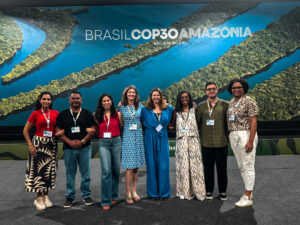
Amnesty International delegates at COP30 in Belem, Brazil. 12 November, 2025. Amnesty Launched the report; Extraction Extinction: Why the lifecycle of fossil fuels threatens life, nature, and human rights at the UN Climate Conference. © Amnesty International
Tunisia: After 18 months of unjust imprisonment, Tunisian lawyer and media commentator Sonia Dahmani was conditionally released. Amnesty has been campaigning for Sonia’s release since she was arrested and sentenced on bogus charges of “spreading false news” in 2024. The organization has issued urgent actions on her behalf and Sonia features in this year’s Write for Rights campaign. This outcome is a tangible demonstration that persistent pressure and solidarity can make a real difference. We will continue to support Sonia in Write for Rights, demanding her full freedom by calling on the Tunisian authorities to quash her unjust sentences and drop all other charges against her.
December
Global: This year, Write for Rights is calling on millions of people to come together to change the lives of individuals whose rights have been violated around the world. By taking just a few minutes to write a letter, post on social media or sign a petition, anyone can help change the world and even save a life.
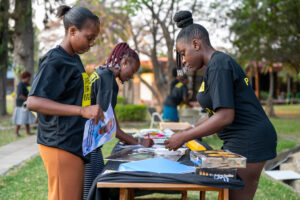
On 16 September 2025, Amnesty International Zimbabwe held a Write for Rights event in Gweru, Zimbabwe. The event was attended by Amnesty International Zimbabwe’s Climate Justice Champions. These Champions are community activists who are driving climate justice initiatives within their communities. A total of 189 letters and petitions were signed during the event. © Amnesty International Zimbabwe
“Together we will prove that, even in the most adverse of circumstances, humanity can, must and will win out,” said Amnesty International’s Secretary General, Agnes Callamard.