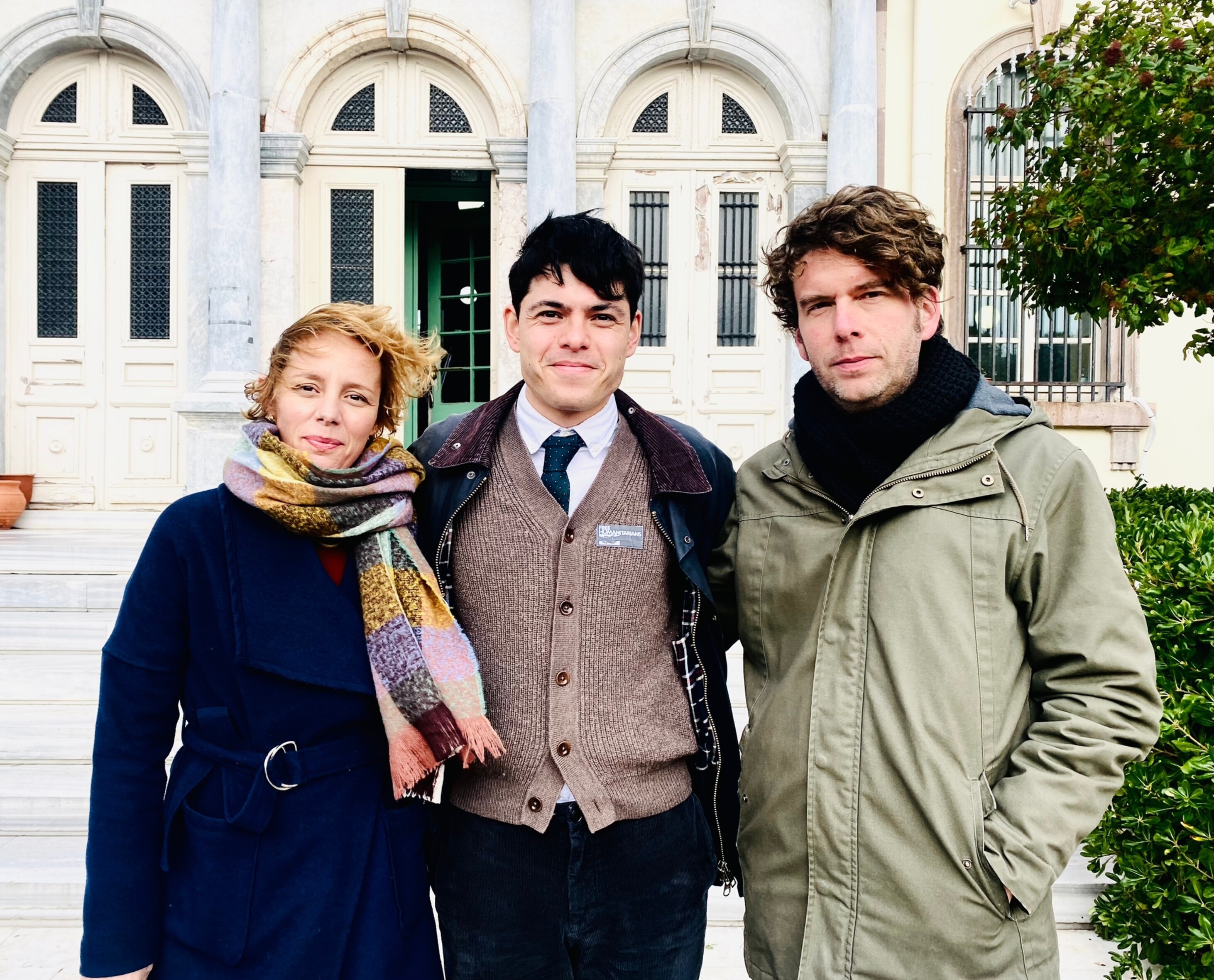
Wies De Graeve is the executive director of Amnesty International Belgium’s Flemish branch.
Tomorrow, Seán Binder will stand trial before the Mytilene Court of Appeals in Lesvos, Greece for his work as a volunteer rescuer, helping those in distress and at risk of drowning at sea. Alongside 23 other defendants, he faces criminal charges including membership in a criminal organization, money laundering and smuggling, with the risk of up to 20 years in prison if convicted.
I first met Seán in 2019. A bright, articulate Irish activist in his twenties, he was our guest at the Belgian launch of Amnesty International’s annual end-of-year campaign. And there, he shared his equally inspiring yet shocking story of blatant injustice, as he and others were being prosecuted for saving lives.
Two years earlier, Seán had traveled to Lesvos as a volunteer, joining a local search-and-rescue NGO to patrol the coastline for small boats in distress and provide first aid to those crossing from Turkey to Greece.
Since 2015, the war in Syria has forced countless individuals to flee their homes and seek safety in Europe via dangerous routes — including the perilous journey across the Aegean Sea. In 2017 alone, more than 3,000 people were reported dead or missing while attempting to cross the Mediterranean, and when authorities failed to step in, many volunteers from across Europe did so instead.
Seán was one of them. He did what any of us would hope to do in his position: save lives and help people. Yet, in 2018, he was arrested by Greek authorities and held in pretrial detention for over 100 days before being charged with a range of crimes alongside other humanitarian workers.
These charges aim to portray those who help people on the move as criminals. And it’s part of a trend sweeping across Europe that’s criminalizing solidarity.
In Malta, three teenagers from West Africa stand accused of helping to bring more than 100 people rescued at sea to safety, and are facing charges that carry a lifelong sentence. In Italy, ships operated by search-and-rescue organizations are being impounded. And in France, mountain guides have faced prosecution for assisting people at the border with Italy.
European governments are not only failing people seeking protection, they’re also punishing those who try to fill that dangerous gap.
I met Seán again in 2021 and 2023, both times outside the courthouse in Mytilene on Lesvos. In 2023, the lesser misdemeanor charges against him and the other foreign defendants — forgery, espionage and the unlawful use of radio frequencies — were dropped. Then, in 2024, the rest of the defendants were acquitted of those same charges.
While leaving the courthouse that day, still facing the more serious felony charges along with the other 23 aid workers, Seán said: “We want justice. Today, there has been less injustice, but no justice.”
As Amnesty International, we’ve been consistently calling for these charges to be dropped. The U.N. and many human rights organizations have also expressed serious concerns about the case, while thousands across Europe and around the world have stood by Seán’s side in defense of solidarity with migrants and refugees, signing petitions and writing letters.
This trial should set off alarms not only for Europe’s civil society but for any person’s ability to act according to their conscience. It isn’t just Seán who is on trial here, it’s solidarity itself. The criminalization of people showing compassion for those compelled to leave their homes because of war, violence or other hardships must stop.
Meanwhile, a full decade after Syrians fleeing war began arriving on Europe’s shores in search of safety and protection, Europe’s leaders need to reflect. They need to learn from people like Seán instead of prosecuting them. And instead of focusing on deterrence, they need to ensure the word “asylum,” from the Greek “asylon,” still means a place of refuge or sanctuary for those seeking safety in our region. People who save lives should be supported, not criminalized.
This week, six years after our first encounter, Seán and I will once again meet in front of the Mytilene courthouse as his trial resumes. I will be there in solidarity, representing the thousands who have been demanding that these charges be dropped.
I hope, with all my heart, to see him finally receive the justice he is entitled to.
Humanity must win.
This was originally published by POLITICO: People who save lives should not be criminalized – POLITICO