The three-year-long brutal conflict in Sudan between the Sudanese Armed Forces (SAF) and the Rapid Support Forces (RSF) and their respective allies continues to intensify and to inflict devastating harm on civilians, Amnesty International said today, ahead of the anniversary of the outbreak of the war on 15 April.
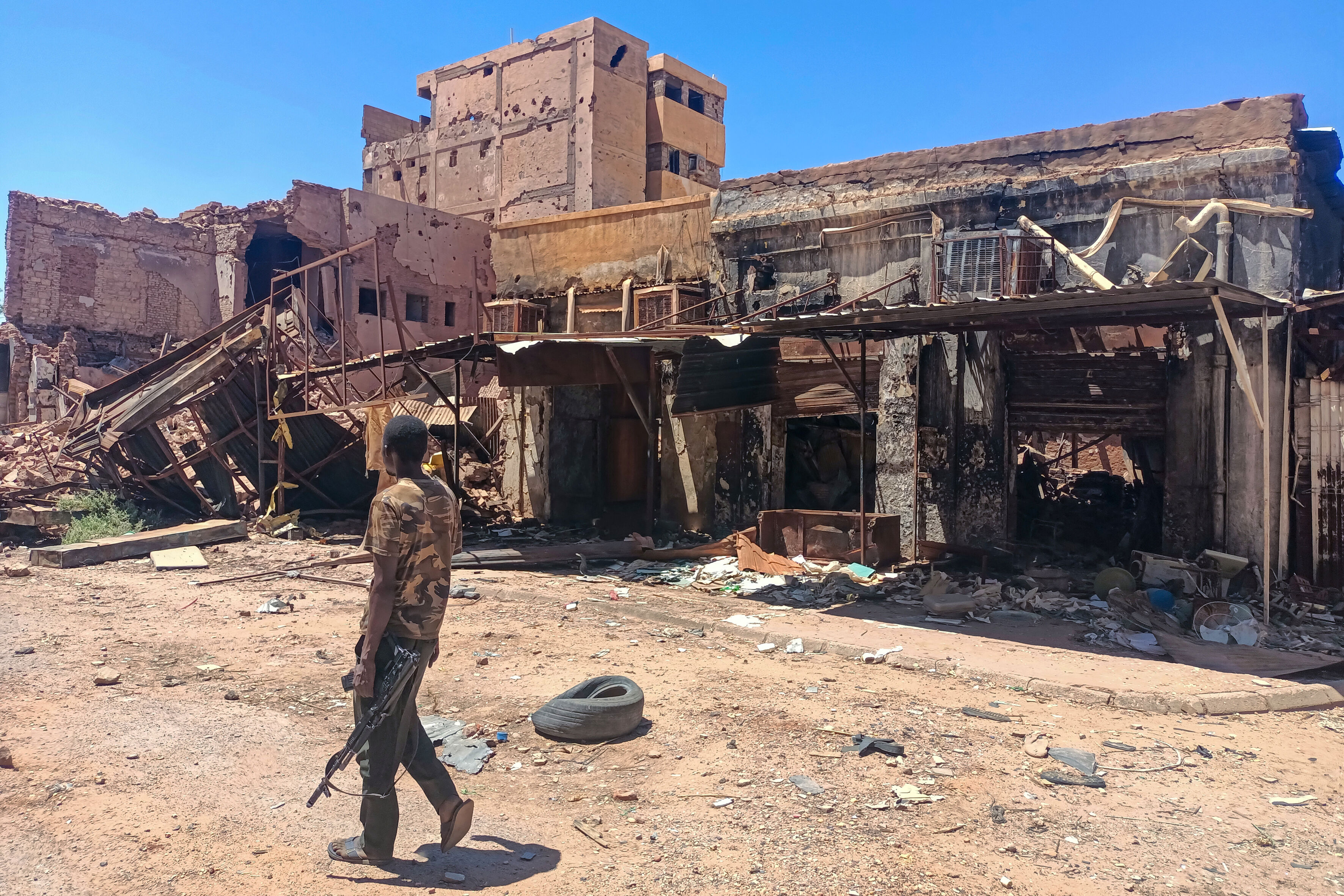
Each shift of the frontlines has left behind a trail of death and destruction characterized by direct and indiscriminate attacks on civilians, looting and destruction of civilian infrastructure, widespread sexual violence, restriction of humanitarian aid delivery and reprisal attacks.
“Time and again, the parties to the conflict have deliberately and indiscriminately targeted civilians, notably during and after their takeover of towns and cities throughout the country. They continue to block humanitarian aid from reaching those desperately in need,” said Agnès Callamard, Amnesty International’s Secretary General.
“Minimal, half-hearted and lackluster responses from the African Union, the UN Security Council and other international and regional actors have only emboldened the perpetrators to continue carrying out these attacks. The world must now urgently prioritize the protection of civilians in Sudan.”
Amnesty International further calls for the international community, including the African Union, the European Union and the UN to prioritize accountability for ongoing crimes under international law and other serious human rights violations and abuses in Sudan. The UN Security Council must expand the Darfur conflict referral to the ICC to also include investigation and prosecution of crimes committed in the rest of Sudan.
The international community must also secure increased funding and pressure the parties to the conflict to ensure unhindered humanitarian access to allow lifesaving healthcare services to be delivered to civilians, including survivors of sexual violence.
“The Sudan conflict is not forgotten; it is being deliberately ignored and neglected. Behind this neglect are countless human beings undergoing untold suffering as the world looks the other way. This has to stop,” said Agnès Callamard.
A war on civilians
Since the armed conflict erupted, Amnesty International has documented systemic attacks on civilians by both the RSF and the SAF.
The violations against civilians include deliberate and unlawful killings, rape, gang-rape, sexual slavery and other forms of sexual violence, torture, enforced disappearances and widespread looting, all of which amount to war crimes and some of which may also amount to crimes against humanity.
During and in the aftermath of a large-scale attack on Zamzam in April 2025, the largest camp for internally displaced persons in Sudan’s North Darfur, the RSF and its allied forces deliberately killed civilians, pillaged and destroyed civilian objects, and took hostages. RSF fighters also deliberately set fire to homes, businesses and damaged critical civilian infrastructure and displaced over 400,000 people in the process.
Amnesty International has also documented widespread atrocities committed by the RSF in El Fasher after the fighters took control of the city in October, following an 18-month siege.
The SAF has conducted air strikes against civilian areas, including on a crowded market in the town of Kabkabiya in North Darfur, killing dozens of civilians. The SAF and its allies have also carried out reprisal attacks against civilians and human rights defenders labelled as RSF collaborators.
Members of the grassroot Sudanese network Emergency Response Rooms, activists, journalists, medical professionals, humanitarian workers, human rights defenders, civilians opposing the war and those perceived to be aligned with opposing forces have faced attacks, harassment, arbitrary detention and killings. The ongoing fighting in the Kordofan region between SAF and RSF is also taking a heavy toll on civilians. El Obeid in North Kordofan is currently under RSF siege.
“The window for avoiding a repeat of El Fasher in El Obeid and in other parts of the Kordofan region is fast closing. Unless fast and coordinated diplomatic pressure is applied on both parties, then a repeat of the mass atrocities committed in El Fasher is inevitable,” said Agnès Callamard.
“Since the conflict erupted, there has been no respite for civilians, they find themselves trapped in a relentless cycle of death, displacement and hunger.”
The conflict also risks expanding to other areas including the White Nile State.
Arms embargo
Amnesty International has previously documented how recently manufactured weapons had been transferred into and around Sudan, in flagrant breach of the existing arms embargo towards all parties to the conflict that applies in Darfur. The organisation provided evidence showing extensive military support from the United Arab Emirates (UAE) to the RSF, in violation of international law. Amnesty International also revealed how French-manufactured weapons systems were being used on the battlefield in Sudan, along with weapons from China, Russia, and Türkiye.
Amnesty International reiterates its calls to the UAE to halt its arms transfers to the RSF immediately. Until they do, all international arms transfer to the UAE must also stop.
Amnesty International also urges the UN Security Council to extend the existing arms embargo beyond Darfur to the rest of Sudan.
“Unless the flow and supply of arms to Sudan is cut, civilians will continue to suffer under daily bombardments. It is time for the UN Security Council to extend the Darfur arms embargo to the rest of Sudan, and to hold to account all countries and entities that have violated it,” said Agnès Callamard.