- Ugandan military presence in clear breach of embargo terms
- Satellite images of South Sudanese military helicopters suggest ongoing embargo violations
- Arms embargo, in place since 2018, due to expire on 31 May
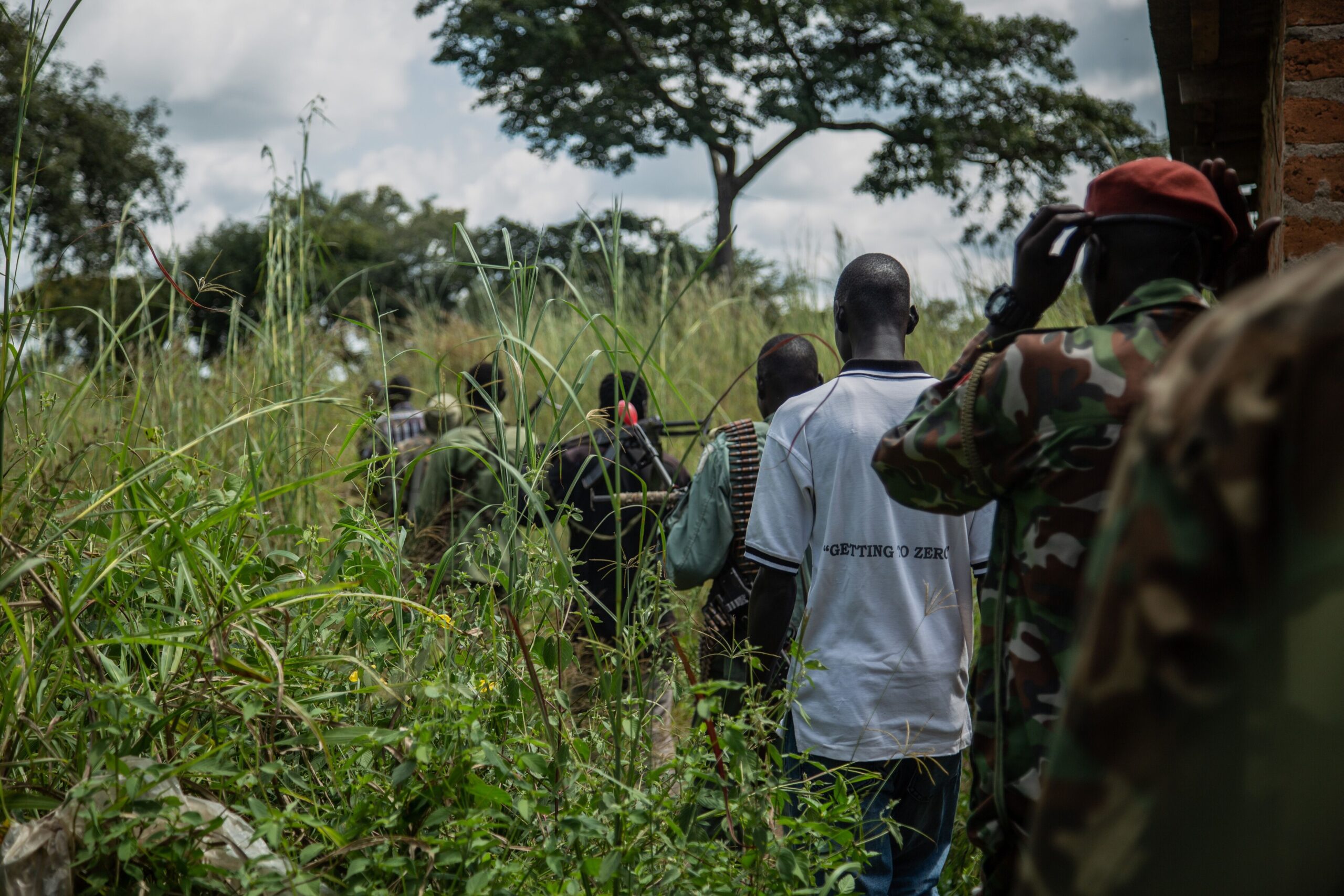
The deployment of armed Ugandan soldiers and military equipment to South Sudan since 11 March 2025 flagrantly violates the arms embargo, Amnesty International said today, ahead of this month’s UN Security Council vote on the embargo’s renewal.
The Uganda People’s Defence Forces (UPDF), which was sent to South Sudan amid escalating violence in Upper Nile State, has given conflicting accounts of the purpose of its mission. Media reports quote UPDF officials saying that they were deployed at South Sudan’s request to secure the capital Juba and that they are “not there for peacekeeping.” However, the UPDF states on its website that the objective of the deployment is to “maintain peace and security in the country.”
The human rights organization also documented evidence of the ongoing use of attack helicopters by the South Sudan People’s Defence Forces (SSPDF), strongly suggesting that the supply of spare parts – an arms embargo violation previously documented by Amnesty International – continues. On 4 May, Médecins Sans Frontières (MSF) reported that two helicopter gunships bombed their pharmacy in Old Fangak the day before and fired at the town, killing seven and injuring 20 others. A deliberate attack targeting a hospital performing its humanitarian function would violate international humanitarian law and constitute a war crime. Just days later media cite eyewitnesses alleging that SSPDF helicopter gunships killed six civilians in Mayom County, Unity State.
“While the UN arms embargo has not been a panacea, the human rights situation would almost certainly be worse without it. Now is not the time to lift the embargo and add more weapons into the fray. We urge the Security Council to renew the embargo, enforce it and protect civilian lives,” said Tigere Chagutah, Amnesty International’s Regional Director for East and Southern Africa.
Open violation of the arms embargo by the UPDF
Amnesty International’s Crisis Evidence Lab verified two videos featuring UPDF personnel and equipment. The first shows dozens of UPDF soldiers arriving at Juba International Airport on 11 March. The second shows armored personnel carriers and military trucks with Ugandan armed forces license plates carrying tanks in Nimule, on the South Sudanese side of the South Sudan-Uganda border, on 17 March.
The terms of the embargo allow exemptions to the prohibition of the supply, sale or transfer of arms and related assistance but only in certain narrowly defined circumstances, and only with advance notification to the UN Security Council Sanctions Committee.
According to information gathered by Amnesty International, neither the Ugandan nor the South Sudanese authorities notified the UN Security Council Sanctions Committee or requested an arms embargo exemption regarding the deployment of UPDF soldiers. This violates the terms of UN Security Council resolution 2428 of 2018 and subsequent resolutions renewing it, which impose an arms embargo on “the direct or indirect supply, sale or transfer to the territory of South Sudan … of arms and related materiel of all types, including weapons and ammunition, military vehicles and equipment, paramilitary equipment, and spare parts for the aforementioned.”
Amnesty International wrote to the Ugandan Minister of Defence and Veteran Affairs, the Chief of Defence Forces and the Ugandan Permanent Mission to the UN in New York on 11 April but received no response.
Companies must cease supply of all arms and ammunition to South Sudan
Amnesty International also verified videos which show that a Freedom Airlines Express flight was used to transport UPDF troops and materiel to Juba on 11 March.
On 16 April, Amnesty International wrote to Freedom Airlines Express sharing the findings. Freedom Airlines Express responded on 24 April, confirming that they transported UPDF personnel from Uganda to Juba International Airport but denying that this violated the arms embargo. The company claimed it “did not transfer any weapons aside from the standard firearms carried by the personnel” and the “purpose of the UPDF presence in the Republic of South Sudan is a matter for the governments of South Sudan and Uganda”.
Nonetheless, Amnesty International believes that the transportation of soldiers and firearms to South Sudan by Freedom Airlines Express violates the embargo.
Verified images also show UPDF soldiers operating Turkish manufactured Katmerciler Hizir Armoured Personnel Carriers, transported by a third party to South Sudan in violation of the embargo. Amnesty International wrote to Katmerciler on 16 April with these findings but has yet to receive a response.
Companies have a responsibility to respect human rights including by conducting human rights due diligence throughout their entire value chain to identify, prevent, and mitigate any actual or potential involvement in human rights abuses. The standard of human rights due diligence required is heightened with respect to business activity impacting conflict-affected areas. In light of the substantial risk that arms and ammunition being transferred to South Sudan will be used by parties to the conflict to commit grave human rights abuses, companies — including Freedom Airlines Express — must immediately cease their involvement in this supply of arms to avoid causing or contributing to these abuses.
Military helicopters flying out of Juba airport
Satellite imagery analysed by Amnesty International shows there was increased movement of Mi-24 attack helicopters at Juba International Airport’s military area between January and March. Higher resolution imagery shows that the three Mi-24 helicopters usually stationed at the airport are missing on several dates in February, suggesting that they are operational.
In 2020, sources told Amnesty International that, when the UN Security Council established the arms embargo in July 2018, the government’s fleet of Mi-24 attack helicopters was non-functional and grounded. Amnesty International subsequently established that the government acquired spare parts to refurbish the helicopters, violating the arms embargo. The fact that these helicopters remain operational strongly suggests further violations of the arms embargo in relation to ongoing sourcing of spare parts.
“Amid heightened tensions in the country, South Sudan and its regional and international partners have a duty to protect civilians by ensuring the current arms embargo is not violated, including through the introduction of new weapons, arms or spare parts into the country,” said Tigere Chagutah.
Background
The UPDF deployment came after armed clashes in Upper Nile State, including subsequent barrel bomb attacks by South Sudan’s government reportedly using incendiary weapons that killed at least 58 people and injured others, and heightened political tensions that saw the arbitrary arrest, including incommunicado detention, of top opposition officials.
The UPDF has regularly been accused, including by UN bodies, of violating the embargo on South Sudan in recent years.
ENDS